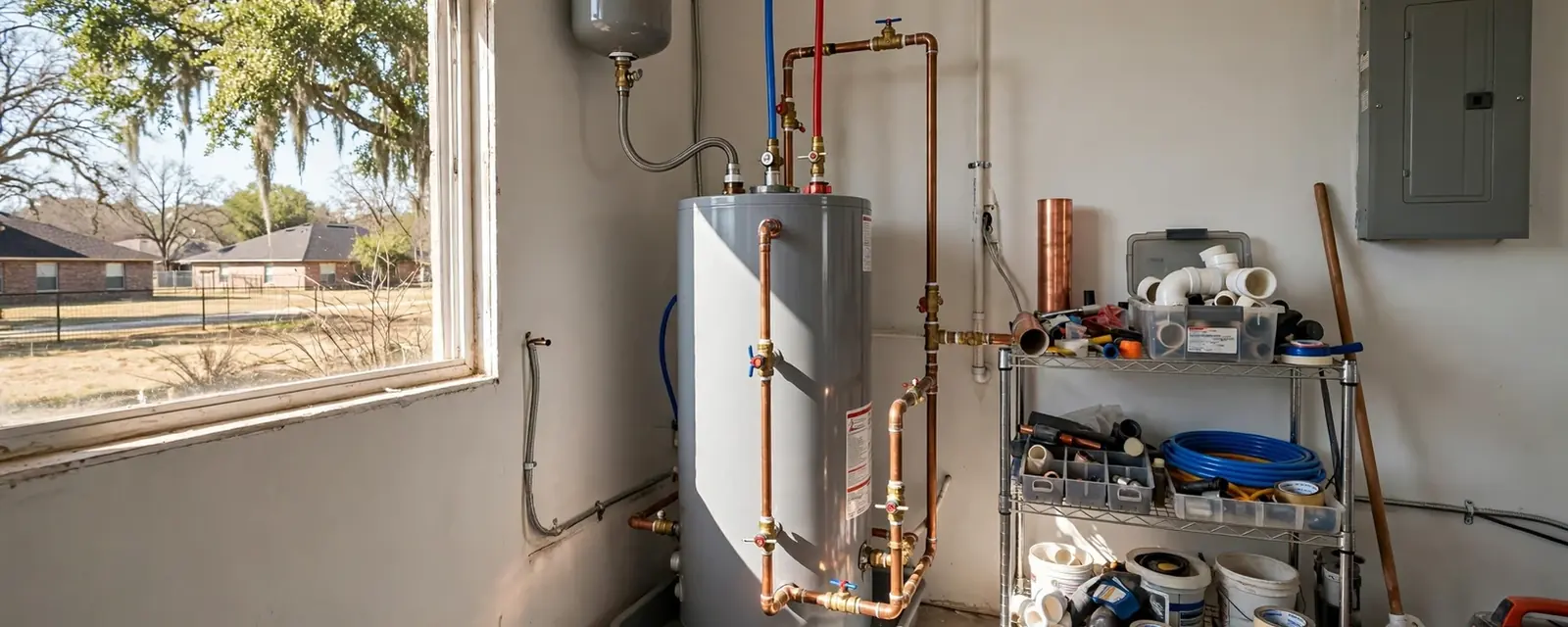
How a recirculation system works
A standard house has one-way plumbing. Hot water leaves the heater and stops at the faucet, and whatever is left in the pipe goes cold. Open the tap and you flush that cold slug down the drain before the hot arrives.
A pump changes that. It circulates hot water slowly through the loop so the line stays warm. The heater cycles a little more often to make up the lost heat, which is the price of the convenience.
Two common system types
Dedicated return line
A separate pipe carries the cooling water back to the heater. It is the cleanest design and is best planned during a remodel or repipe.
Comfort valve system
A pump under the farthest sink uses the cold line to carry water back. It is easier to retrofit, and the cold tap runs a little warm at first.
Which one suits your house depends on the framing, the distance from the heater and whether a return line is already in the walls. We look at the layout before we recommend either.
Have a plumbing problem now?
Call the 24/7 line and a plumber will talk it through.
| Control type | How it runs | Good for |
|---|---|---|
| Timer | Runs at set hours | Predictable mornings and evenings |
| Thermostat | Runs when the line cools | Steady demand, less waste |
| Demand button | Runs when pressed | Low energy use, small households |
| Smart controller | Learns or schedules by app | Variable routines |
What an install involves
Check the heater
A tank or tankless unit must support recirculation. Some tankless models include a built-in pump.
Choose the loop
We decide between a dedicated return line and a comfort valve under the farthest fixture.
Mount and wire
The pump goes near the heater or under the sink, with a power source and a control.
Balance and test
We set the timer or temperature, flush the lines and check for leaks.
If your water heater is nearing the end of its life, it is wiser to pair the pump with water heater replacement than to install it on a failing tank.
Is a recirculation pump right for your house?
A pump pays off most in a house with a long run between the heater and the farthest bathroom, or where the primary suite is on a different floor from the heater. Short runs gain little, because the wait for hot water is already brief.
Look at three things before you decide: how long the wait is today, how many fixtures sit at the end of the line and whether you have a crawlspace or attic route for a return pipe. A long wait at one bathroom can be solved with a comfort valve under that sink alone.
- Wait of more than about 30 seconds at the farthest tap
- Hot line longer than the heater-to-kitchen distance
- A bathroom added far from the original plumbing
- A tank or tankless unit that supports a recirculation loop
Care and upkeep for a recirculation loop
A pump has few moving parts, but the loop needs attention. Check the control setting after a season, listen for new noise and look at the pump and fittings for drips. A pump that runs all day wastes heat, so keep the schedule tight.
Flushing the heater once a year removes sediment that a loop can stir up, and checking the anode rod protects the tank. If the pump fails, the house returns to normal hot water delivery, so a failed pump is an inconvenience, not an emergency.
Mercer Island water and your recirculation loop
Mercer Island buys its water from Seattle Public Utilities, which uses Cedar River supply, and the City adds lime to adjust pH for corrosion control. The City does not publish a hardness figure for its water, so test your tap or ask Public Works at (206) 275-7608 for the latest report.
That matters for a pump loop because water circulates continuously and warm water drops scale faster than cold. If your tap tests hard, plan a periodic flush and consider a tankless water heater with a service schedule. The City also says it cannot control plumbing inside your home, so your own loop is worth a look.
Source type: City of Mercer Island water quality report and Public Works contactCosts, savings and trade-offs
A pump saves water that would run down the drain while you wait, and it saves minutes each morning. It adds a little electricity use and more heater cycles. A timer or demand control keeps both small.
Insulating the hot line helps the loop hold heat longer. Pipes in a crawlspace or outside wall lose the most, so they are the first place to insulate. For a house that cannot support a pump, shortening the run with a small point-of-use heater is another option we can discuss.
Recirculation pump questions
Yes, many tankless units support it, and some have a pump built in. We check the model first so the install follows the maker's requirements.
It can lower water use because less runs down the drain while waiting. Heating costs may rise a little, so the net depends on your habits.
A quality pump is quiet. The noise comes mostly from the heater cycling, and a timer keeps that to the hours you need.
The City's water report does not list hardness, so test your tap. Harder water leaves more scale in a warm loop, which a flush and a tank anode check help control. We also serve Medina, where Bellevue lists soft water.