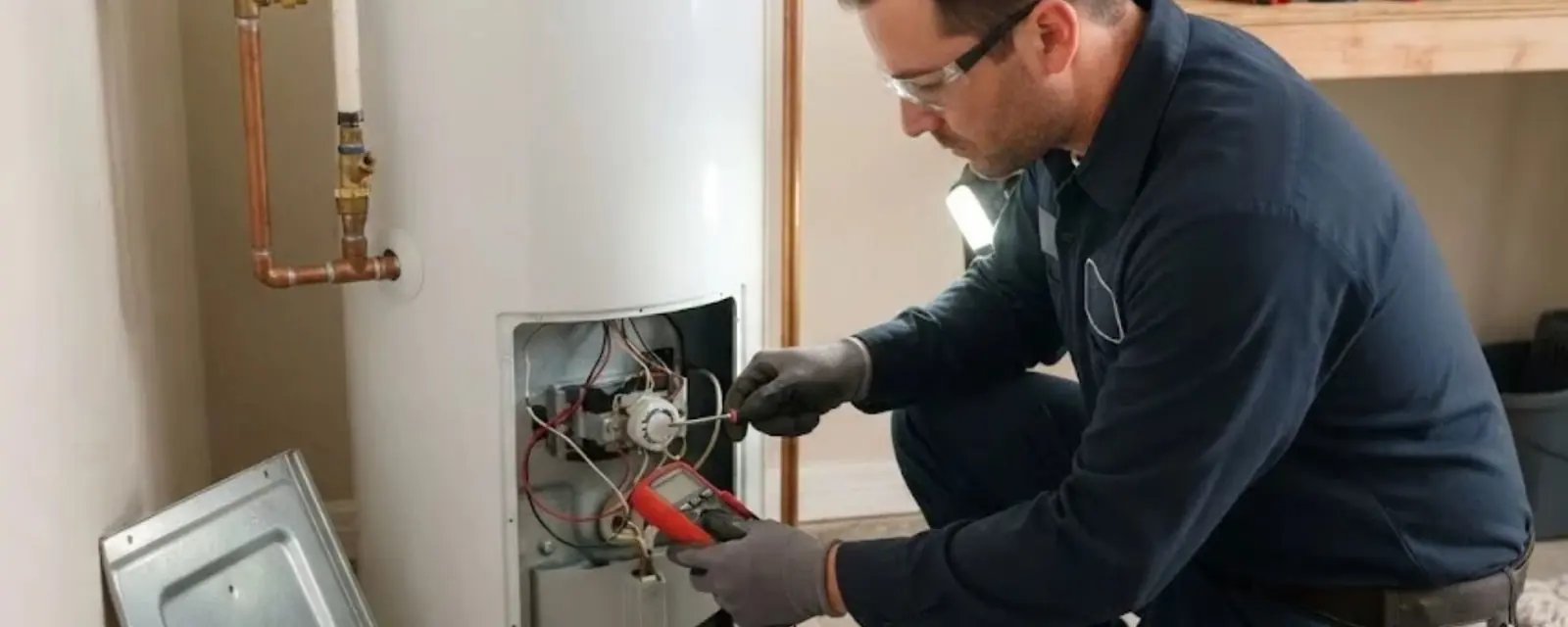
Safe checks before you call
- Confirm the gas valve to the heater is open and the thermostat is set to a safe level
- Check whether other gas appliances work, which would point to a supply issue
- Look at the pilot window if your model has one, without touching anything
- Check the breaker if the unit has an electronic ignition or blower
- Note any error code or blinking light and the model number
If a check does not solve it, stop there. Gas controls, flue parts and burners are not a place for guessing.
| Symptom | Likely cause | Who fixes it |
|---|---|---|
| Pilot will not stay lit | Thermocouple or draft issue | Licensed plumber |
| No hot water, burner off | Gas valve, igniter or thermostat | Licensed plumber |
| Lukewarm water | Sediment or a weak burner | Flush, then plumber if it persists |
| Rumbling noise | Sediment | Flush the tank |
| Water at the base | Tank or fitting leak | Shut off and call a plumber |
Have a plumbing problem now?
Call the 24/7 line and a plumber will talk it through.
Maintenance a homeowner can do
Flushing the tank clears sediment that insulates the water from the burner. Turn off the gas and water supply, attach a hose to the drain valve and drain some water into a bucket until it runs clear. Close the valve and refill the tank before you relight.
Keep the area around the heater clear of boxes and paint, and check that the vent pipe has no gaps. A clean burner and a clear flue are the two things that keep a gas unit safe and efficient.
Understanding the main parts
A gas tank heater has a few parts that matter. The thermostat and gas control valve manage temperature and open the gas. The pilot or electronic igniter lights the burner. The thermocouple or flame sensor shuts the gas off if the flame goes out.
The flue carries exhaust up and out. The anode rod inside the tank is a sacrificial metal that protects the steel. The temperature and pressure relief valve opens if heat or pressure climbs too high. Knowing these names helps you describe the problem on the phone.
Warning signs that need a plumber now
- A smell of gas near the heater
- Soot or scorch marks around the draft hood
- A yellow or orange flame instead of blue
- Water leaking from the tank
- A relief valve that discharges on its own
- Rust or corrosion on the flue
These point to a safety problem, not a comfort problem. Turn off the heater if it is safe to reach and call for service. Do not run a heater with a damaged flue.
Costs and what changes them
Parts like a thermocouple or igniter are modest, and a gas control valve costs more. Labor, access and the time of the call also matter. A tank near the end of its life shifts the math toward replacement, which is why the first visit should include an honest look at the tank.
Ask the plumber to explain the failed part and the expected life left in the unit before you approve the work.
Gas, straps and permits on Mercer Island
Puget Sound Energy is the gas utility serving Mercer Island, and it responds to gas leak reports at no charge. The MyBuildingPermit water heater tip sheet that covers Mercer Island calls for seismic straps, a Type B vent and a gas shutoff with a sediment trap on gas units.
The MyBuildingPermit chart lists water heater replacement and gas piping as permit work. A repair that swaps a part is different from a replacement, and a plumber can tell which side your job is on. The Permit Counter at (206) 275-7605 can confirm permit steps for your address.
Washington plumbing follows the Uniform Plumbing Code (UPC) with state amendments, and the Permit Counter can say which code governs each part of a gas job.
Source type: Puget Sound Energy, MyBuildingPermit water heater tip sheet and permits chartWhen to repair and when to replace
If the tank is sound and a part failed, repair is sensible. A tank that leaks cannot be repaired, and a unit past about ten years old with repeated problems may cost more to keep than to replace. Our water heater repair page explains each fault, and water heater replacement covers the swap.
Ask the plumber to show you the failed part and explain the cost of both paths. A clear price before work starts lets you choose with facts.
Gas water heater questions
If the manual shows a safe procedure and you smell no gas, many owners do. If you smell gas, leave and call PSE at 1-888-225-5773 or 911.
Common causes are a pilot or igniter fault, a thermocouple, a gas valve, or a tripped safety. A plumber can find which.
A part swap often does not, but replacement is listed as permit work. Ask the Permit Counter at (206) 275-7605. We also serve Medina.
Once a year is a common guide, and sediment-heavy water may need more. Test your tap to learn your water's hardness.