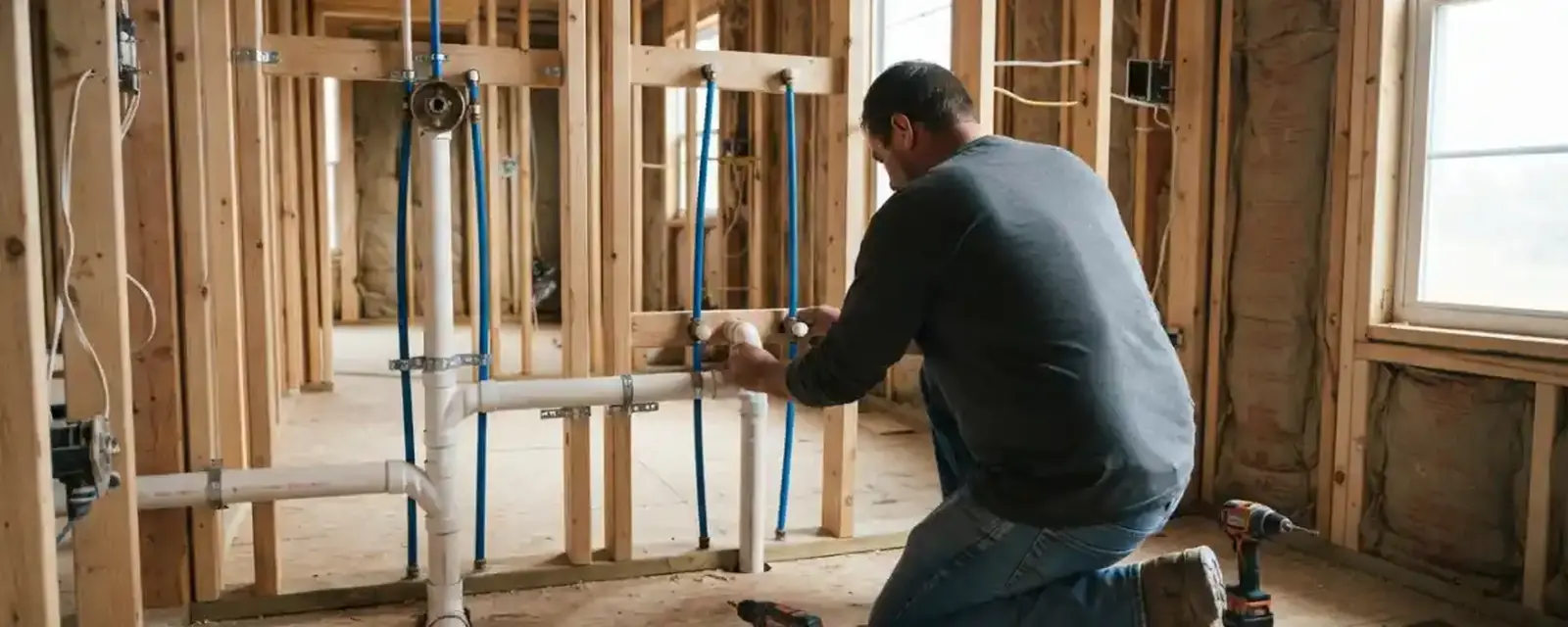
What a vent does
When water flows down a drain, it pulls air behind it. If air cannot enter, the flow creates suction that can pull water out of nearby traps. A vent supplies that air, usually through a pipe that rises through the wall and out the roof.
Signs of a venting problem include gurgling drains, slow fixtures, a sewage smell and traps that run dry. A single slow drain can be a clog, and several symptoms together point to venting.
| Vent type | How it works | Where used |
|---|---|---|
| Roof vent | Pipe runs up through the roof | Most common |
| Air admittance valve | One-way valve lets air in | Where a roof vent is hard, if code allows |
| Wet vent | A drain that also serves as a vent | Bathroom groups where code allows |
| Loop or island vent | Loops up under a counter before going out | Kitchen islands |
Have a plumbing problem now?
Call the 24/7 line and a plumber will talk it through.
Plan the route
Choose the fixture, find a path through framing and decide on the roof exit.
Size the pipe
Vent size follows the drain size and the number of fixtures.
Run and connect
Pipe is run, sloped to drain back, and tied to the drain and the stack.
Seal the roof and test
A flashing seals the roof penetration and the system is tested and inspected.
Where to start if a drain gurgles
Run each fixture alone and listen. If only one drain gurgles, check for a clog first. If several fixtures gurgle at once, look at the vents. A bird nest or leaves can block a roof vent, and a plumber can check it with a camera or a cable from the roof.
A blocked vent shows up in rain or after a storm in some houses. If you suspect that, do not climb a wet roof. A plumber or a roofer can inspect it safely.
What a vent installation costs and why
The cost depends on the route, the number of floors, the roof type and the access. A short run in an open wall is inexpensive. A new vent through a finished two-story wall costs more because of the opening and repair work.
Roof work adds flashing and shingles. Ask for a written scope that includes the roof penetration and the final test.
A simple way to think about vent size
Bigger drains and more fixtures call for bigger vents, and long runs call for more care. The code sets the exact numbers, and your plumber works from them. As a homeowner, the useful takeaway is that a vent is never an afterthought, because a drain that is sized well but vented poorly still gurgles.
If you are adding a bathroom, ask for the vent plan on paper before the walls close, so you know where the pipe will rise and where it will leave the roof.
Codes and permits for venting on Mercer Island
Washington plumbing falls under WAC 51-56, based on the Uniform Plumbing Code (UPC) with state amendments. Vent size, distance to the trap and the use of air admittance valves are code matters, so ask the Permit Counter at (206) 275-7605 what applies to your job.
Most single-family plumbing permits can be started online at mybuildingpermit.com. The City housing element counts 2,783 island homes built before 1959 and 3,966 from 1960 to 1979, and older homes may have vents that were routed differently from today's practice. A remodel is a good time to check them.
Source type: Washington State code, City of Mercer Island permit pages and housing element of the City planDoing it yourself or hiring a plumber
Cutting into walls, framing and the roof is serious work, and a mistake can cause leaks or fail inspection. A vent that terminates too close to a window or an air intake can bring sewer gas in. Most homeowners are better served by a licensed plumber for a new vent.
Our plumbing installation team handles vent planning during remodels. If a drain in your house gurgles and you suspect a clog, a cable pass by drain cleaning can rule that out first.
Common venting mistakes
- A vent that is too small for the drain it serves
- Too much distance between the trap and the vent
- Flat or backward slope in a vent pipe
- An open vent near a window or intake
- A leaking roof flashing after the install
Each of these shows up as noise, slow drains or leaks. A good inspection catches them before the walls close.
Working with an inspector
The inspector sees the vent at rough-in, before drywall. Have the work visible and the pressure test ready. A clean rough-in inspection saves rework and keeps the schedule on track.
Plumbing vent questions
Often a partial clog or a venting problem. If several fixtures gurgle, a vent issue is likely.
Sometimes, where the code and the inspector allow. Ask the Permit Counter at (206) 275-7605.
New plumbing generally goes through the permit process. Confirm the rules for your project with the Permit Counter.
Yes. We serve Medina and the island and follow each city's permit process.