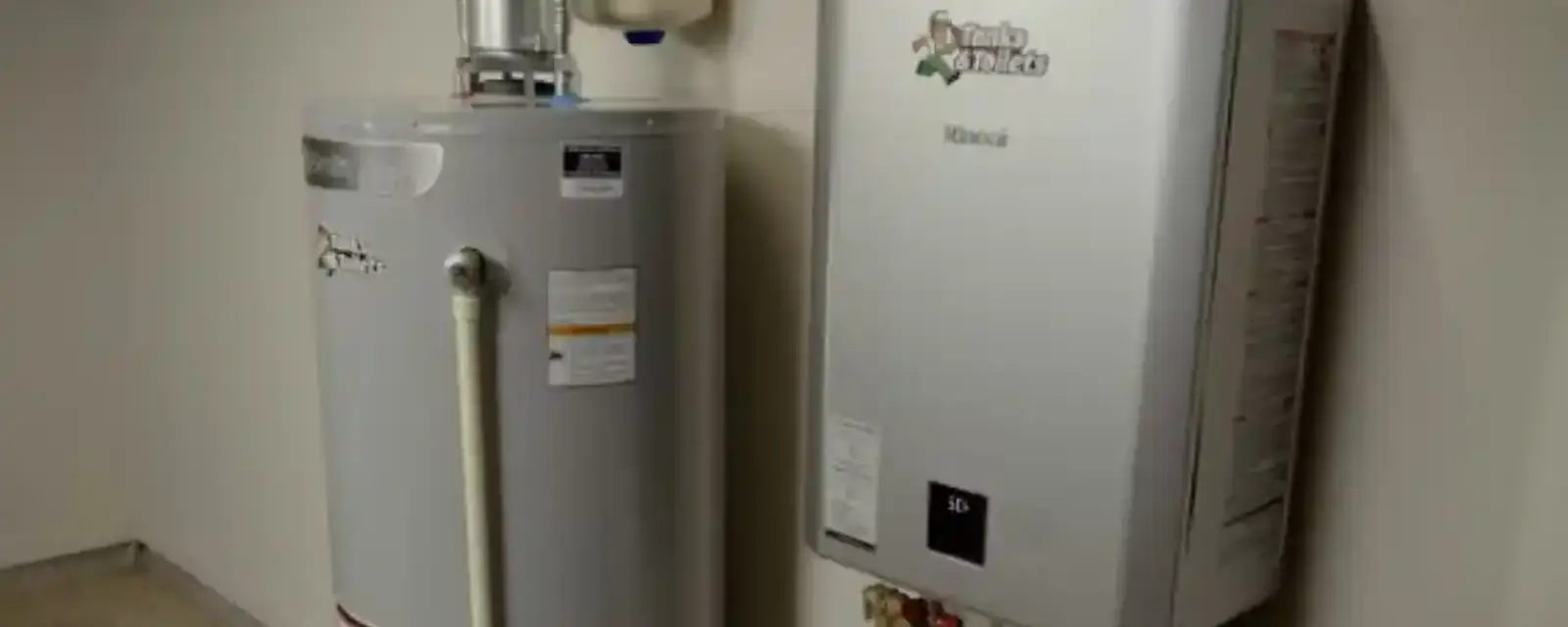
The path of the water
You open a tap
Cold water enters the unit and a flow sensor detects the movement.
The burner lights
The control board opens the gas valve and the igniter lights the burner.
Water passes the heat exchanger
Hot gases heat copper or stainless coils as water flows through.
Hot water exits
A sensor adjusts the flame to hold your set temperature. When the tap closes, the burner stops.
| Part | Job | Common failure |
|---|---|---|
| Flow sensor | Starts the cycle | Scale or debris blocks it |
| Igniter | Lights the burner | Fails to spark |
| Heat exchanger | Transfers heat to water | Scale buildup |
| Vent and exhaust fan | Moves exhaust outside | Blocked or loose vent |
| Condensate drain | Carries off acidic condensate | Clogs or freezes |
Have a plumbing problem now?
Call the 24/7 line and a plumber will talk it through.
What limits a tankless heater
Output is limited by flow rate and temperature rise. If you ask for too much hot water at once, the unit cannot keep up and the temperature drops. Sizing the unit to your peak demand avoids that, as our tankless water heater page explains.
Very low flow can also be a problem. If a tap runs below the minimum flow, the unit may not fire. A recirculation setup and a slightly higher flow at a distant fixture can address this.
Tankless compared with a tank
A tank heater keeps 40 to 50 gallons hot all day and loses a little heat through the walls. A tankless unit loses none while idle but cannot exceed its output. The right choice depends on how your household uses hot water.
| Question | Tank heater | Gas tankless |
|---|---|---|
| Standby heat loss | Yes | No |
| Hot water limit | Tank size | Flow rate |
| Space | Floor space | Wall space |
| Venting | Standard flue | Sealed vent |
Safety features built in
Tankless units include flame sensors, overheat limits and exhaust monitoring. If something is off, the unit shuts down and shows a code. These are protections for a combustion appliance and are not bypassed.
A carbon monoxide alarm near the unit and bedrooms is a sensible companion to any gas appliance. If you ever smell gas or the alarm sounds, leave the building and call 911 or Puget Sound Energy.
Reading error codes
Most units display a code when something is wrong, such as an ignition failure, a venting fault or a scale warning. The code is in the manual and points to the likely cause. Write it down before you call, and do not reset the unit repeatedly, which can mask the problem.
Noise, heat and clearance
A tankless unit makes a soft whoosh when it fires, and a fan hum on models with a blower. Mount it where that sound will not bother a bedroom wall. The vent and the unit need clearance from combustible material, which the maker lists in the manual.
Plan a spot with room to service the unit and reach the isolation valves for flushing. A heater tucked behind a tight panel is hard to maintain, and a unit that is hard to reach tends not to get serviced.
Gas, water and permits on Mercer Island
Puget Sound Energy supplies gas on the island. If you smell gas, leave and call 1-888-225-5773 or 911. The MyBuildingPermit chart lists gas piping and water heater replacement as permit work, so a tankless install usually involves a permit, and the Permit Counter at (206) 275-7605 can confirm.
The City buys water from Seattle Public Utilities, mostly from the Cedar River, and does not publish a hardness figure. Test your tap, since scale is the most common cause of tankless trouble. Ask Public Works at (206) 275-7608 for the latest water report.
Source type: Puget Sound Energy, MyBuildingPermit and City of Mercer Island water quality reportUpkeep that keeps it running
Flush the unit with a descaling solution on a schedule that suits your water. Clean the inlet filter, check the vent and keep the condensate drain clear. Many units show a code when service is due.
If the unit stops heating, error codes point to the cause. Our water heater repair page lists common faults, and a visit can clear scale and test the controls.
Is it right for your home
Tankless suits homes that want endless hot water, space and efficiency. It asks more of the gas line and vent than a tank. A house with a small gas line or a hard vent route may be better served by a tank or hybrid unit.
A plumber can check your gas line, vent path and water test and tell you honestly which type fits.
Gas tankless questions
Yes. They use a sealed vent for exhaust and often a condensate drain. The route is planned before install.
Demand may exceed the unit's output, or the unit may have a scale or flow problem. A plumber can test it.
It can work, but scale builds faster in hard water, so plan on descaling. The City does not list hardness, so test your tap.
Yes. We serve Medina and the island, and the same plumbing team handles both.